

English
- English
- Русский
TENGYU DYNAMIC
Specializing in silicone adhesive and sealant research and development, production, sales in one of the national high-tech enterprises

What is acrylic sealant and how to use it?
2023-09-27 14:42:52
Click:
“
Get the details on the different types of acrylic sealant and how to use them in this guide. With so many choices at the supply store, you’ll feel more comfortable after reading these tips and explanations.
”
WHAT IS ACRYLIC SEALANT?
Acrylic products are made from polymers or long chain molecules. These can be natural materials or chemically synthesized. Acrylic sealers are generally produced using synthetic polymers, water, latex, and fillers. They have many advantages in that they are paintable, easy to clean up, inexpensive, and easy to use.
The best acrylic sealants are highly durable, waterproof, and act both as an adhesive and a sealant. In the next section, we will discuss some common uses of acrylic latex sealant.
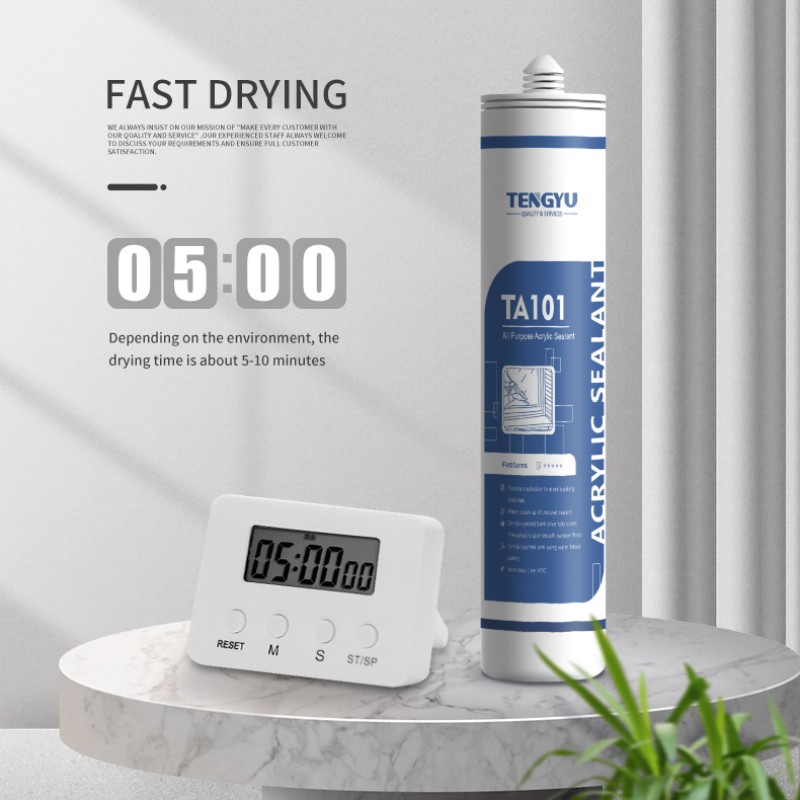
BEST APPLICATIONS FOR ACRYLIC LATEX SEALANT
Silicone sealants have long set the standard for durability, adhesion, and water resistance. However, silicone has some drawbacks. The most significant is that it is not paintable. In some settings, this is very important for a finished look.
The best acrylic sealants come close to silicone in sealing out weather and filling gaps, but they also accept paint very well for an excellent look when completed.
Acrylic latex sealant is by far the most commonly used sealant for interior applications such as door and window trim, crown mouldings, chair rail, and other wood and composite trim. It fills the gaps, seals out weather, and cleans up very easily with water.
Acrylic sealers are also used to bridge the gaps between the wall and cabinets or decorative materials, such as stone or tiled areas. Exterior-grade acrylic sealants can be used outdoors but must be painted with exterior paint.
While pure silicone is sometimes still used around sinks and bathtubs, siliconized acrylic latex sealant is more common nowadays.
Siliconized acrylic sealant: the best of both worlds. If you need a sealer with superior water and moisture resistance which is also paintable, there is a solution. Siliconized acrylic latex sealant gives you the paintability and ease of use of an acrylic latex sealant, but it has the excellent adhesion and waterproof qualities of a silicone product.

STEP-BY-STEP APPLICATION OF ACRYLIC SEALER
Applying acrylic sealant is easy. Just follow these steps:
Ensure that the area to be sealed is clean and dry. If needed, apply masking tape along one or both edges to create a straight line when the acrylic sealer is applied.
Cut the end of the tube at a 45° angle along the nozzle to create a bead of the correct width.
Load the sealant tube into the caulk gun and begin applying the sealant at one end of the gap. Steady pressure and movement along the seam will help to deliver an even bead of acrylic sealer.
Using a sealant tool or a damp finger, smooth the bead of sealant into a uniform line and blend the edges into the surrounding material.
That's it. Allow the acrylic sealant to dry for the specified time and you're ready.
Here's a tip that can save you a lot of time and effort. Loctite has a revolutionary product that allows you to apply new sealer directly over top of most old sealant without removing it.
Related Articles
Quality Control in Sealant & Waterproof Coating Manufacturing | From Raw Materials to Finished Products
What Is No More Nails? No More Nails vs Silicone Sealant Explained
Silicone Sealant Yellowing: How to Avoid Discoloration in Clear Caulk
What Is No More Nails? Uses, Strength & How to Apply It
Floor Adhesives: A Comparative Guide to Acrylic, MS, and Polyurethane
You May Also Like
-
top Reco Quality Control in Sealant & Waterproof Coating Ma...

-
top Reco What Is No More Nails? No More Nails vs Silicone S...
nail free glue 
-
top Reco Silicone Sealant Yellowing: How to Avoid Discolora...
silicone sealant 
-
top Reco Which sealant is more mold resistant polyurethane ...
silicone sealant acrylic sealant pu sealant 
-
Hydrophilic Waterstop Polyurethane Sealant for Con...

-
MS Polymer Wood Flooring Adhesive: Product Selecti...


 Tina
Tina Tina
Tina
