

English
- English
- Русский
TENGYU DYNAMIC
Specializing in silicone adhesive and sealant research and development, production, sales in one of the national high-tech enterprises

Cracking and Powdering of Window and Door Sealants: Causes and Solutions
2026-02-07 00:00:00
Click:
“
Learn the main causes of cracking and powdering in window and door sealants, including improper application and low-quality silicone sealants, with practical solutions.
”
In construction projects, cracking and powdering of window and door sealants are considered serious quality defects. Once these issues occur, the sealant loses its sealing function, leading to water leakage, air infiltration, and reduced energy efficiency of the building envelope.
Below are the most common causes of sealant cracking and powdering in window and door applications, along with practical solutions.

1. Insufficient Sealant Application Depth
If the sealant is applied too thinly or with insufficient depth, the cured sealant joint cannot withstand external movement or deformation caused by temperature changes, wind load, or structural displacement. As a result, the sealant may crack during service.
This issue often occurs when the sealant bead does not match the actual size of the window or door joint, leading to inadequate bonding area and insufficient sealant thickness.
How to solve the issue?
- Adjust the sealant application size according to the actual joint dimensions
- Ensure sufficient bonding width and depth between the sealant and the adjacent substrates
- Follow recommended joint design principles to allow the sealant to accommodate movement without failure
Proper joint design and adequate sealant thickness are essential for long-term sealing performance.
2. Use of Low-Quality or Oil-Filled Sealants
In order to reduce production costs, some sealant manufacturers significantly lower the content of silicone base polymer and instead add large amounts of cheap mineral oil and powder fillers, producing so-called oil-filled sealants.
These sealants may not show obvious problems at the early stage of application. However:
- Mineral oil (alkane-based substances) has poor compatibility with silicone polymers
- Over time, the mineral oil migrates out of the cured sealant
- The low silicone content results in poor aging resistance
After a period of use, the sealant may become hard, shrink, crack, or even powder, leading to premature failure.
How to solve the issue?
- Select sealants with stable quality and sufficient silicone polymer content
- Avoid products filled with mineral oil
- Work with reliable manufacturers that comply with relevant standards
Simple Field Identification Method
A simple on-site test can help identify potential mineral oil content:
- Apply the sealant onto a flat plastic film
- Allow it to cure for several hours
- Observe the plastic film
- If the plastic film shrinks or wrinkles, the sealant is very likely to contain mineral oil
- The more severe the shrinkage or wrinkling, the higher the mineral oil content
Conclusion
Cracking and powdering of window and door sealants are not random failures but are usually caused by improper application design or poor-quality materials.
To ensure long-term sealing performance and avoid leakage problems:
- Apply sealants with adequate joint width and depth
- Select high-quality, non–oil-filled sealants with proven aging resistance
- Follow proper construction and quality control practices
Choosing the right sealant and applying it correctly are critical steps in maintaining the durability and performance of window and door systems. Tengyu window and door sealant is a right choice for your project!
Prev : Common Facade Sealing Problems and How to Avoid Them
Next : How to Select the Secondary Sealant for Insulating Glass Units (IGUs)
Related Articles
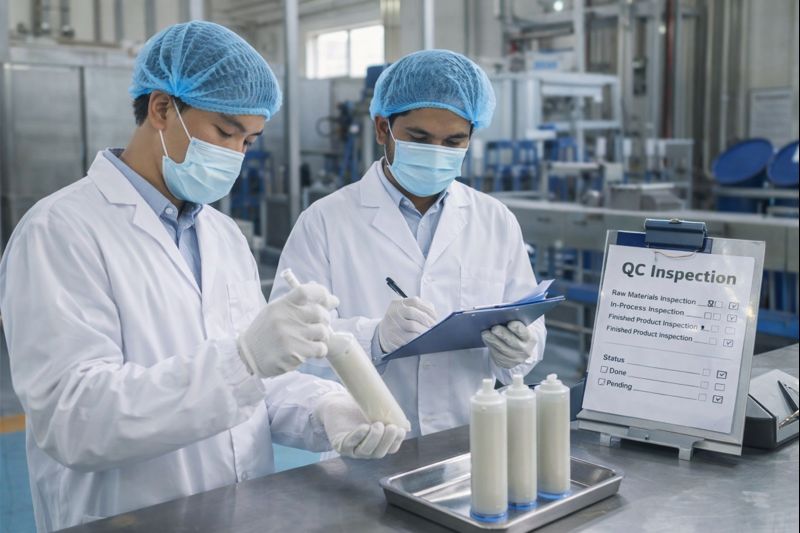
Quality Control in Sealant & Waterproof Coating Manufacturing | From Raw Materials to Finished Products
What Is No More Nails? No More Nails vs Silicone Sealant Explained
Silicone Sealant Yellowing: How to Avoid Discoloration in Clear Caulk
What Is No More Nails? Uses, Strength & How to Apply It
Floor Adhesives: A Comparative Guide to Acrylic, MS, and Polyurethane
You May Also Like
-
top Reco Quality Control in Sealant & Waterproof Coating Ma...

-
top Reco What Is No More Nails? No More Nails vs Silicone S...
nail free glue 
-
top Reco Silicone Sealant Yellowing: How to Avoid Discolora...
silicone sealant 
-
top Reco Which sealant is more mold resistant polyurethane ...
silicone sealant acrylic sealant pu sealant 
-
MS Polymer Wood Flooring Adhesive: Product Selecti...

-
Polyurethane waterproof concrete sealant Types: 1K...
construction materials Polyurethane sealant Factory & Manufacturer 
 Tina
Tina Tina
Tina
