

English
- English
- Русский
TENGYU DYNAMIC
Specializing in silicone adhesive and sealant research and development, production, sales in one of the national high-tech enterprises

The Types Of Sealants You Might Want To Know
2022-12-02 16:19:22
Click:
“
There are mainly six types of sealants that are the most common in construction.
They differ in cost and applications, based primarily on the performance properties and the substrate properties.
”
There are mainly six types of sealants that are the most common in construction.
They differ in cost and applications, based primarily on the performance properties and the substrate properties.
Water-based sealants, also known as latex, are popular for residential use because of their ease of application and ability to adhere to most substrates. These sealants are easy to apply and clean up, and dry relatively quickly, and they are also paintable. Water-based sealants can be prone to shrinkage and can pull away from the substrate creating gaps, and allowing water to penetrate.
Acrylic sealants are UV stable making them suitable for exterior applications, and are not prone to shrinkage. They are paintable like latex. But acrylic sealants aren’t as flexible as some other sealants, so movement over time can cause cracking.
Butyl sealants adhere well to many different materials but can be hard to apply due to their stringier consistency. They have poor resistance to abrasion and struggle to accommodate movements that introduce shearing forces. They are highly water-resistant, but they’re not very resistant to movement, meaning these sealants can tear. They also won’t accept paint well.
Polysulfide sealants have excellent flexibility even at low temperatures with little shrinkage or UV degradation and can be used for underwater applications. They are more expensive than similar sealants and have a tendency to have higher levels of volatile organic compounds (VOCs).
Silicone sealants have excellent thermal resistance, good dynamic movement capability, and good adhesion. These products remain very flexible and are highly water-resistant. They can be easily vandalized and tend to collect dirt. They’re also less prone to shrinking than most other sealants, and they stick to almost any material.
Polyurethane sealants adhere well to the majority of different surfaces with little substrate preparation. These sealants create strong bonds between materials and seal joints to prevent fluids and other substances from passing through. They’re also abrasion resistant and provide more flexibility than many other sealant types, making them a favorite in the construction industry. Polyurethane sealants are rarely paintable, but they often come in tinted hues like gray, black, or white for matching with concrete and trim.
Related Articles
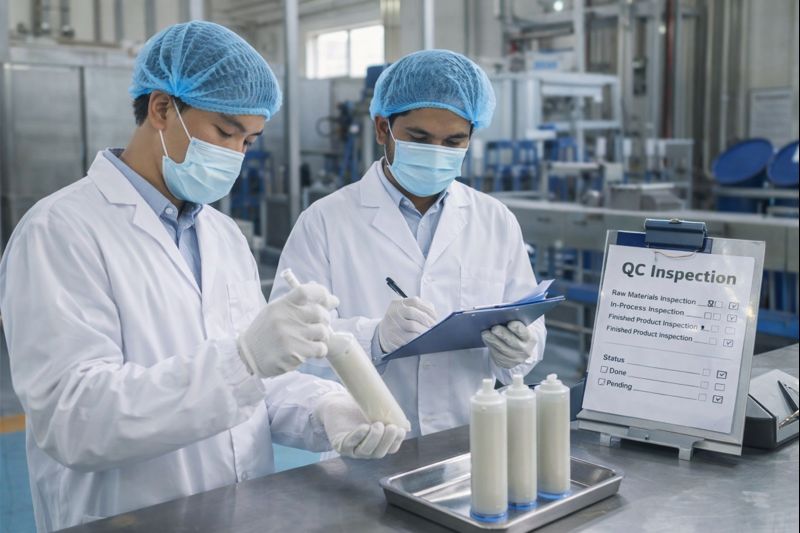
Quality Control in Sealant & Waterproof Coating Manufacturing | From Raw Materials to Finished Products
What Is No More Nails? No More Nails vs Silicone Sealant Explained
Silicone Sealant Yellowing: How to Avoid Discoloration in Clear Caulk
What Is No More Nails? Uses, Strength & How to Apply It
Floor Adhesives: A Comparative Guide to Acrylic, MS, and Polyurethane
You May Also Like
-
top Reco Quality Control in Sealant & Waterproof Coating Ma...

-
top Reco What Is No More Nails? No More Nails vs Silicone S...
nail free glue 
-
top Reco Silicone Sealant Yellowing: How to Avoid Discolora...
silicone sealant 
-
top Reco Which sealant is more mold resistant polyurethane ...
silicone sealant acrylic sealant pu sealant 
-
MS Polymer Wood Flooring Adhesive: Product Selecti...

-
Polyurethane waterproof concrete sealant Types: 1K...
construction materials Polyurethane sealant Factory & Manufacturer 
 Tina
Tina Tina
Tina
