

English
- English
- Русский
TENGYU DYNAMIC
Specializing in silicone adhesive and sealant research and development, production, sales in one of the national high-tech enterprises

A Brief Introduction to Acrylic Sealants
2023-01-03 10:47:50
Click:
“
Acrylic sealant is a synthetic, water-based ingredient made from acrylic resins, used for caulking, jointing and filling cracks and gaps mainly in the construction industry.
”
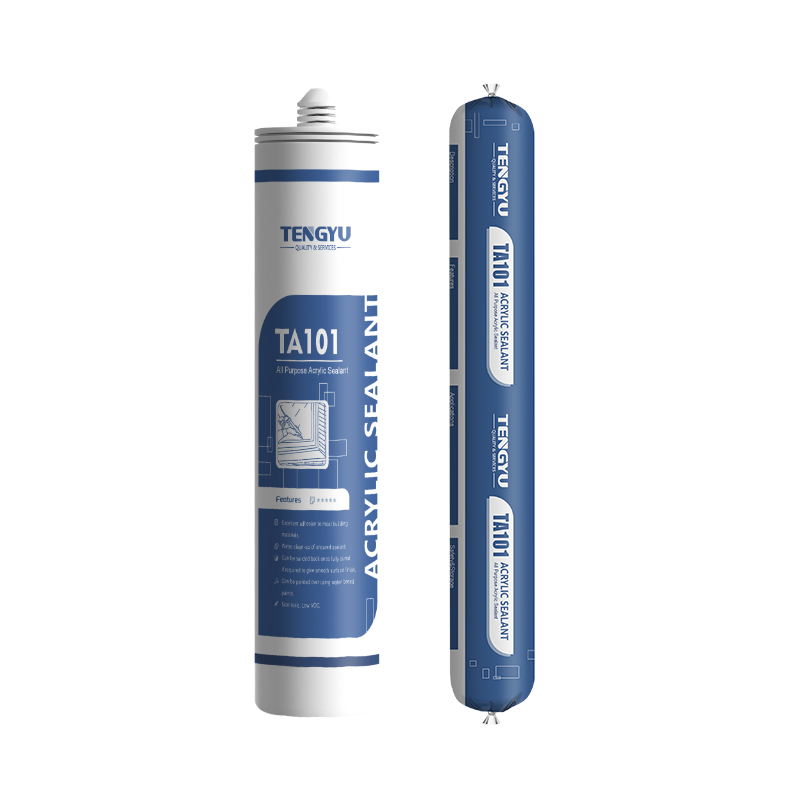
What is acrylic sealant?
Acrylic sealant is a synthetic, water-based ingredient made from acrylic resins, used for caulking, jointing and filling cracks and gaps mainly in the construction industry.
What properties acrylic sealant has?
Good fluidity in a wide temperature range, strong adhesion, good elasticity and good weather resistance once cured
Non-toxic, harmless, non-flammable and volatile
Variety, environmental friendly, low VOC
Fast cure and cheap price
Good air permeability
Paintable
Good adhesion and waterproof
Easy to use and clean
Where does acrylic sealant adhesive apply?
Acrylic sealants can be widely used in interior decoration, general construction expansion joints and general engineering joint filling in non-long-term water-immersion environment waterproof sealing. For example, it is used to seal the gaps between indoor walls, skirting lines, door and window frames and the walls etc.
How to apply acrylic sealant?
Ensure that the area to be sealed is clean and dry. If needed, apply masking tape along one or both edges to create a straight line when the acrylic sealer is applied.
Cut the end of the tube at a 45° angle along the nozzle to create a bead of the correct width.
Load the sealant tube into the caulk gun and begin applying the sealant at one end of the gap. Steady pressure and movement along the seam will help to deliver an even bead of acrylic sealer.
Using a sealant tool or a damp finger, smooth the bead of sealant into a uniform line and blend the edges into the surrounding material.
Allow the acrylic sealant to dry for the specified time.
Prev : The Application of Silicone Sealants in Curtain Wall
Next : The Differences Between Silicone Sealants and Polyurethane Sealants
Related Articles
Quality Control in Sealant & Waterproof Coating Manufacturing | From Raw Materials to Finished Products
What Is No More Nails? No More Nails vs Silicone Sealant Explained
Silicone Sealant Yellowing: How to Avoid Discoloration in Clear Caulk
What Is No More Nails? Uses, Strength & How to Apply It
Floor Adhesives: A Comparative Guide to Acrylic, MS, and Polyurethane
You May Also Like
-
top Reco Quality Control in Sealant & Waterproof Coating Ma...

-
top Reco What Is No More Nails? No More Nails vs Silicone S...
nail free glue 
-
top Reco Silicone Sealant Yellowing: How to Avoid Discolora...
silicone sealant 
-
top Reco Which sealant is more mold resistant polyurethane ...
silicone sealant acrylic sealant pu sealant 
-
MS Polymer Wood Flooring Adhesive: Product Selecti...

-
Polyurethane waterproof concrete sealant Types: 1K...
construction materials Polyurethane sealant Factory & Manufacturer 
 Tina
Tina Tina
Tina
