

English
- English
- Русский
TENGYU DYNAMIC
Specializing in silicone adhesive and sealant research and development, production, sales in one of the national high-tech enterprises

What kind of adhesive is the sealant?
2023-04-12 00:00:00
Click:
“
Sealants are commonly used adhesives in our lives, epoxy grouting sealants, acrylic sealants, exterior wall sealants, joint sealants, door frame sealants, different types of sealants use different application scenarios
”

1. Basic concept of sealant
Sealant is an adhesive that is often used in our life, epoxy grouting sealant, acrylic sealant, exterior wall sealant, joint sealant, door frame sealant, different types of sealant use different application scenarios, At the same time, it has the functions of bonding and sealing, and the adhesive used for sealing is called sealant for short.
2. Factors affecting the curing performance of sealant
(1) Dry surface: The sealant has a shape when it is punched out. When you touch its surface with your fingers or other materials, the glue will adhere to your fingers or materials. After the sealant is produced, the surface will start to solidify when exposed to moisture. After the skin is formed, when the surface is touched with fingers or materials, there will be no glue sticking to the fingers or materials. This is called surface dry.
(2) Surface dry time: When the sealant is punched out of the container, the time required for it to dry is the surface dry time.
(3) Detackification: After the sealant surface is dry, touch the surface with your fingers. Although there is no glue sticking to your fingers, you can still feel a certain amount of adhesion between the surface of the sealant and your fingers. This phenomenon is called The reason is that it has not disappeared. This is a manifestation that the curing reaction on the surface of the glue has not yet been fully performed. As time goes on, it will further solidify until the surface forms a layer of skin with certain elasticity and strength, which feels dry when touched with fingers and has no feeling of sticking, which we call tack-free.
(4) Viscosity-free time: The time required for the sealant to be viscous-free from the container is the viscosity-free time.
(5) Environmental factors: have a significant impact on the curing performance of the sealant. The first is the influence of temperature. The higher the temperature, the faster the curing reaction. The phenomenon is that the surface is dry and the tack disappears faster. If the temperature is very low, such as below 5°C, the sealant will cure very slowly. And if the temperature is too high, such as above 40°C, the sealant will be inconvenient to use because the surface will dry too quickly.
(6) Humidity: It also has a significant impact on the curing performance of the sealant, because the curing reaction of the sealant requires moisture in the air, so too dry weather such as relative humidity below 40°C is not conducive to the curing of the sealant. But it is not that the higher the humidity, the better, because when the sealant is cured, volatile small molecules are released. If the air humidity is too high, the small molecules are not easy to volatilize, which is not conducive to the curing of the sealant. Experiments have proved that when the relative humidity is higher than 80°C, the detackification and deep curing of the sealant will be affected, and sometimes the surface of the sealant is still sticky after 2-3 days.
The standard conditions for sealant performance stipulated by national standards are temperature (23+2) °C, relative humidity (50+5) °C
3. Main properties of sealant 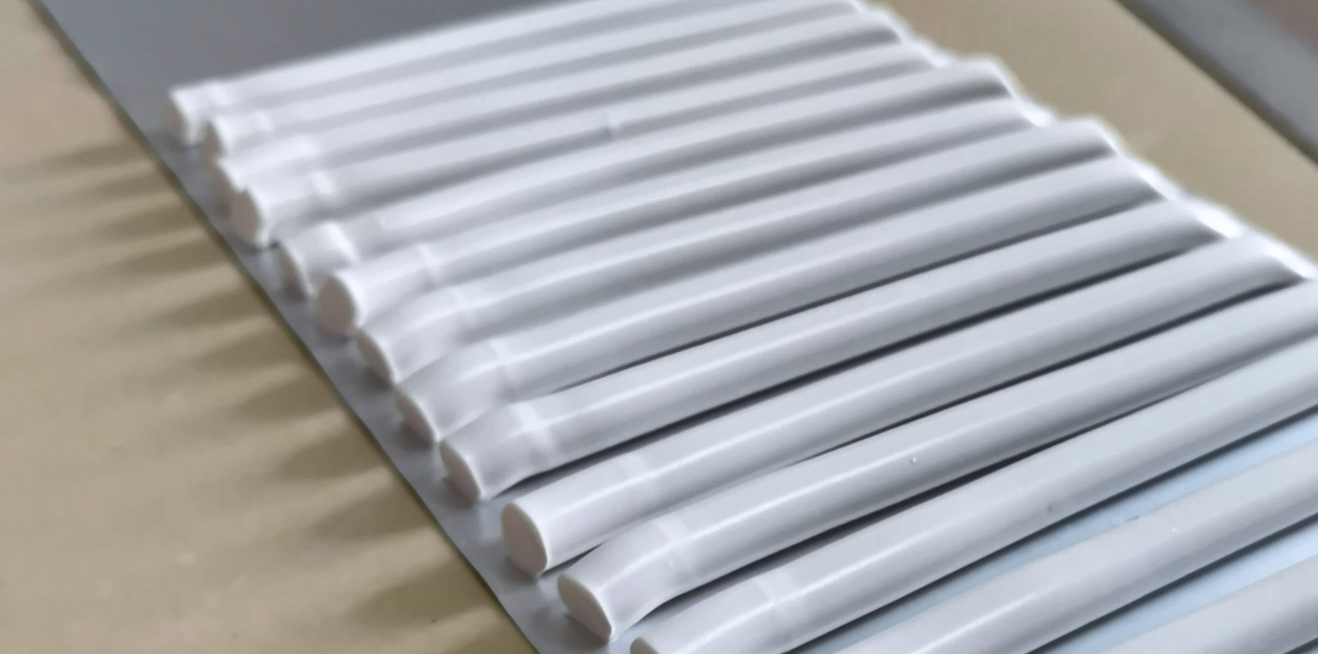
(1) Appearance: The appearance of the sealant mainly depends on the dispersion of the filler in the base rubber. Filler is a kind of solid powder. After being dispersed by kneader, grinder and planetary machine, it can be evenly dispersed in the base rubber to form a fine and fine shape. A small amount of slight fines or fine sand, this is acceptable and normal. If the filler is not well dispersed, many very coarse particles will appear. In addition to the dispersion of fillers, some factors will also affect the appearance of the product, such as mixing in particle impurities, crusting, etc. These conditions are considered rough in appearance. The method of observing the appearance is to take the product out of the package and directly observe it, or put 1-2g of the product on a white paper, fold the white paper in half and flatten it, and then open it for observation. The term is called "butterfly observation". Coarse grains should be judged when coarse grains are found.
(2) Hardness: Hardness refers to the hardness after the sealant is completely cured into a rubber body, which is one of the physical and mechanical properties of the product. Hardness refers to the ability of a material to resist a substance scratching or pressing into its surface. According to the different methods of measuring hardness, there are many ways to express hardness, such as Brinell hardness, Rockwell hardness, and Shore hardness. The country stipulates that Shore A hardness is used. The standard hardness value is tested by a hardness tester to make a test piece according to the national standard method. The hardness of the sealant is high, the rigidity of the surface sealant is strong, and the elasticity and flexibility are insufficient; the hardness is small, the opposite is good, the elasticity and flexibility are good, and the rigidity is insufficient. Therefore, the sealant is neither as hard as possible, nor as soft as possible, but has a certain range according to actual needs.
(3) Tensile strength: Tensile strength is also one of the mechanical properties of the sealant after it is fully cured. Tensile strength is also called tensile strength, breaking strength, commonly known as tensile strength. It refers to the ability of a material to resist damage when it is subjected to tension. The tensile strength value is also tested according to the method stipulated in the national standard. According to the needs of its use, the sealant must have a certain strength requirement, especially the structural adhesive, and the minimum value of the strength is clearly stipulated in the national standard. A sealant with too poor strength cannot meet the use needs. However, it is not advisable to overemphasize the strength of the sealant and ignore the elasticity.
(4) Elongation: Elongation is the elastic performance of the sealant after it is completely cured, and it is also one of the mechanical properties. It refers to the percentage of the ratio between the total elongation and the original length of the material when stretched. A sealant with good elasticity will have a greater elongation. As the minimum requirement for elongation, the sealant must meet the requirements for constant elongation in the national standard.
(5) Tensile modulus and displacement capacity: Tensile modulus and displacement capacity are the comprehensive performance of the above-mentioned mechanical properties. Tensile modulus characterizes the strength of a sealant when stretched to a certain elongation. Therefore, the expression method of the modulus is combined with the elongation at the same time. For example, when the elongation is 25%, the tensile modulus is 0.46Mpa. The displacement capacity is the capacity of the sealant when the joint is displaced due to thermal expansion and contraction of the base material. ability to withstand displacement. For example, we say that the sealant has a displacement capacity of +25%, which means that the seam using this product can withstand 25% of the original width of stretching and compression. to 1 5mm. Displacement capacity can be detected by stretching and compressing cycles or cold stretching and hot pressing cycles.
(6) Adhesion to the substrate: This is a very important performance in the actual use of the sealant. The sealant must have good adhesion to the actual substrate before it can be used. The easy way to test the adhesion is to clean and dry the base material with an appropriate solvent or detergent, and put the sealant on it. After the sealant is cured (about 3-5 days), peel off the sealant by hand Observe the bonding condition.
(7) Extrusion: This is an item of the construction performance of the sealant, which is used to indicate the difficulty of the sealant when it is used. If the glue is too thick, the extrusion will be poor, and it will be very laborious to apply the sealant. However, if the glue is made too thin simply considering the extrudability, it will affect the thixotropy of the sealant. The extrudability can be measured by the method stipulated in the national standard.
(8) Thixotropy: This is another item of sealant construction performance. Thixotropy is an antonym of fluidity, which means that the sealant will only change its shape when a certain pressure is applied, and it can maintain its shape when there is no external force. shape without flowing. The determination of the sag specified by the national standard is the judgment of the thixotropy of the sealant.
4. Simple judgment method of sealant performance
The sealant is punched out from the glue bottle into a strip, and the following properties can be tested or simply judged during the process of making glue and observing the strip.
(1) Extrusion: You can feel the extrudability of the glue through the difficulty of applying the glue.
(2) Curing performance: After the adhesive strip is punched out, the surface dry time, tack-free time and complete curing time can be measured to determine whether the curing performance is normal.
(3) Thixotropy: After the rubber strip is punched out, it will not deform when placed horizontally, and the thixotropy of the surface sealant is qualified. If there is a phenomenon of flow and deformation, it indicates that the thixotropy is not good.
(4) Hardness: After the rubber strip is fully cured (generally about 1-2 days), you can feel its hardness by pressing the rubber strip with your fingers. This method can make a relative comparison of the hardness.
(5) Strength, elasticity and elongation: Pulling the fully cured adhesive strip can make a relative judgment on the strength, elasticity and elongation. When carrying out this experiment, we must pay attention to: we usually put the adhesive strip on the paper. After tearing off the adhesive strip from the paper, a layer of paper is often stuck on the adhesive strip. If the adhesive strip is pulled like this, since the paper is not Elastic, it will tear when you pull it, and at the same time, the adhesive strip glued to the paper will tear and open a hole. Since the tear strength of silicone sealant is generally relatively low, the stress generated by stretching will concentrate on the tear It is easy to break the rubber strip from here, which will affect the observation and judgment. The correct way is to put the adhesive strip on the plastic film, and pull the adhesive strip to judge the performance after the adhesive strip is completely cured.
5. Corresponding standards for sealant (part)
(1) National Standard GB16776 "Silicon Structural Adhesives for Construction": This is a mandatory national standard that specifies the basic performance requirements of structural adhesives. All structural adhesives produced, sold and used in my country must meet this standard requirements.
(2) Building material industry standard IC/T883-2001 "Construction sealant for stone": In addition to implementing GB/T14683, stone sealant also implements this standard.
(3) Building materials industry standard JC/T885-2001 "Anti-mold sealant for construction": In addition to implementing GB/T14683, anti-mold sealant also implements this standard.
(4) The company needs to formulate corporate standards, and the general indicators are higher than the national standards.
6. Storage conditions of sealant
As mentioned earlier, the sealant is cured by exposure to moisture in the air, and is stable in storage in a sealed state. However, this stability is not absolute. During the storage of the sealant, the hydroxyl group contained in the filler will have a side reaction with the crosslinking agent and catalyst. This side reaction will gradually consume the crosslinking agent and catalyst in the system. gradually fails. The phenomenon shown is that with the extension of the storage time of the sealant, its curing performance will decrease when it is used, such as surface dryness, extended time for tack removal or even no tackiness, poor strength, inability to fully cure, and glue thickening dry out etc. If this change is very weak and the curing performance of the glue can meet the requirements of users and standards, we think that the sealant is still within the shelf life. If this change exceeds this limit, the curing performance of the sealant cannot reach The request indicates that it has expired.
It can be seen that the storage period of the sealant is directly related to the degree of side reactions of the system. In addition to the relationship between the side reactions and the system formulation process itself, the speed of side reactions is directly related to the storage conditions: mainly the temperature, the higher the storage temperature Higher, the faster the side reaction, the shorter the storage period of the product, so we have clear regulations on the storage conditions of the product, requiring the storage temperature not to be higher than 27°C. Of course, the lower the storage temperature, the better. Too low storage temperature (such as below 0°C) may cause adverse changes in the state of the glue.
Another factor that requires special attention during sealant storage is airtightness. The packaging used for the sealant (plastic bottle, flexible packaging aluminum film, etc.) must be well sealed. If the seal is not good, the sealant will cure due to exposure to air.
Related Articles
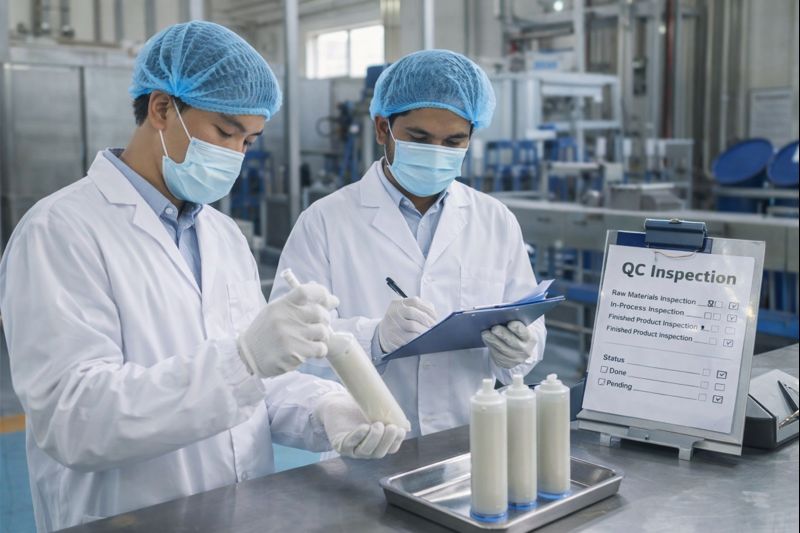
Quality Control in Sealant & Waterproof Coating Manufacturing | From Raw Materials to Finished Products
What Is No More Nails? No More Nails vs Silicone Sealant Explained
Silicone Sealant Yellowing: How to Avoid Discoloration in Clear Caulk
What Is No More Nails? Uses, Strength & How to Apply It
Floor Adhesives: A Comparative Guide to Acrylic, MS, and Polyurethane
You May Also Like
-
top Reco Quality Control in Sealant & Waterproof Coating Ma...

-
top Reco What Is No More Nails? No More Nails vs Silicone S...
nail free glue 
-
top Reco Silicone Sealant Yellowing: How to Avoid Discolora...
silicone sealant 
-
top Reco Which sealant is more mold resistant polyurethane ...
silicone sealant acrylic sealant pu sealant 
-
MS Polymer Wood Flooring Adhesive: Product Selecti...

-
Polyurethane waterproof concrete sealant Types: 1K...
construction materials Polyurethane sealant Factory & Manufacturer 
 Tina
Tina Tina
Tina
