

English
- English
- Русский
TENGYU DYNAMIC
Specializing in silicone adhesive and sealant research and development, production, sales in one of the national high-tech enterprises

What Are The Classification And Characteristics of Construction Silicone Sealant?
2023-04-25 00:00:00
Click:
“
With the modernization of urban buildings, silicone sealants have been widely used in construction fields such as curtain walls, doors and windows, hollow glass and interior decoration, playing the role of bonding and sealing.
”

Generally, building silicone sealants on the market are classified and named according to their uses, and can be roughly divided into five categories: silicone structural adhesives, silicone weather-resistant adhesives, ordinary silicone adhesives, secondary silicone sealants for insulating glass, and special-purpose adhesives. Silicone sealant.
1. Silicone structural adhesive
Uses: Mainly used for structural bonding of glass and aluminum sub-frames of hidden frame glass curtain wall or semi-hidden frame glass curtain wall
Features: Glue the glass to the aluminum sub-frame, withstand the weather aging of ultraviolet rays, ozone, moisture, etc. for a long time (not less than 25 years); withstand the load caused by wind, gravity, temperature, etc., and have high requirements for strength and aging resistance , there are certain requirements for elasticity.
2. Silicone weather-resistant adhesive
Application: It is used to seal the joints of various curtain walls (see Figure 1) to ensure the airtightness and watertightness of the curtain wall.
Features: It needs to withstand large seam width changes and weather aging from outdoor ultraviolet rays, ozone, moisture, etc. for a long time. It has high requirements for elasticity (displacement capacity) and aging resistance, and does not require strength.
3. Ordinary silicone sealant
Uses: used for door and window joints, exterior wall caulking, interior decoration sealing and other position sealing
Features: To withstand the relatively small change in the width of the joint, there is a certain requirement for displacement capacity, and no strength is required. Outdoor joints have high requirements on aging resistance, while indoor joints have certain requirements on aging resistance.
4. Secondary silicone sealant for insulating glass
Application: It is used for the secondary sealing of insulating glass to ensure the stability of the insulating glass structure. According to the stress situation, it is divided into secondary sealant for insulating glass for structure (mainly used for insulating glass of hidden frame and semi-hidden frame glass curtain wall) and Non-structural insulating glass secondary sealant (mainly used for open frame curtain wall and insulating glass for doors and windows).
Features: high modulus, not too soft, high requirements for aging resistance
5. Special purpose silicone sealant
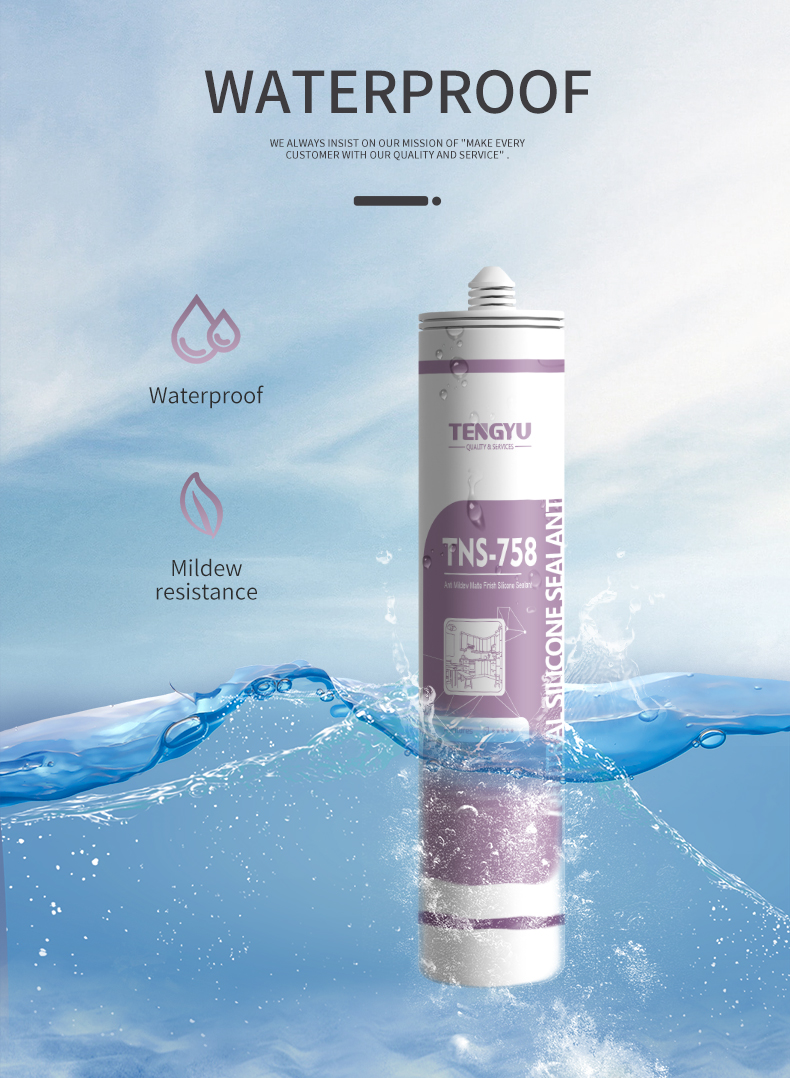
Uses: Used for joint sealing with special requirements, such as fireproof sealant used for fireproof sealing of various layers of curtain wall engineering, fireproof sealing of various doors and windows, indoor fireproof partitions and fireproof sealing of interior decoration, etc. (see Figure 4); anti-mildew The sealant is used for the installation of various kitchen utensils and sanitary ware, as well as waterproof and mildew-proof sealing (see Figure 5).
Features: It needs to have some special properties (such as mildew resistance, fire prevention, etc.).
Prev : Do you know the phenomenon of "drumming"?
Next : What Are The Advantages of Polyurethane Sealants? How To Use Polyurethane Sealant?
Related Articles
Quality Control in Sealant & Waterproof Coating Manufacturing | From Raw Materials to Finished Products
What Is No More Nails? No More Nails vs Silicone Sealant Explained
Silicone Sealant Yellowing: How to Avoid Discoloration in Clear Caulk
What Is No More Nails? Uses, Strength & How to Apply It
Floor Adhesives: A Comparative Guide to Acrylic, MS, and Polyurethane
You May Also Like
-
top Reco Quality Control in Sealant & Waterproof Coating Ma...

-
top Reco What Is No More Nails? No More Nails vs Silicone S...
nail free glue 
-
top Reco Silicone Sealant Yellowing: How to Avoid Discolora...
silicone sealant 
-
top Reco Which sealant is more mold resistant polyurethane ...
silicone sealant acrylic sealant pu sealant 
-
MS Polymer Wood Flooring Adhesive: Product Selecti...

-
Polyurethane waterproof concrete sealant Types: 1K...
construction materials Polyurethane sealant Factory & Manufacturer 

 Tina
Tina Tina
Tina
