

English
- English
- Русский
TENGYU DYNAMIC
Specializing in silicone adhesive and sealant research and development, production, sales in one of the national high-tech enterprises

What should we pay attention to when using silicone sealant?
2024-01-23 14:45:45
Click:
“
The colder the winter, the greater the need for safe and high-quality buildings. Let us master the precautions for using silicone structural sealant and protect the safety of the building!
”
1. When one-component sealant is used on-site, sometimes it is too late to modify it, so why does it cause crusting?
Answer: The curing of one-component silicone sealant is greatly affected by ambient temperature and humidity. The sealant surface dries faster at high temperatures. If the sealant is exposed to the air for too long after application and is not modified in time, the colloid surface has become surface dry. In order to avoid not being able to modify the sealant after application, conduct a simple surface drying time test in the construction environment before construction. Modification before surface drying can avoid this phenomenon.
2. There are bubbles in the two-component mixture. What is the reason?
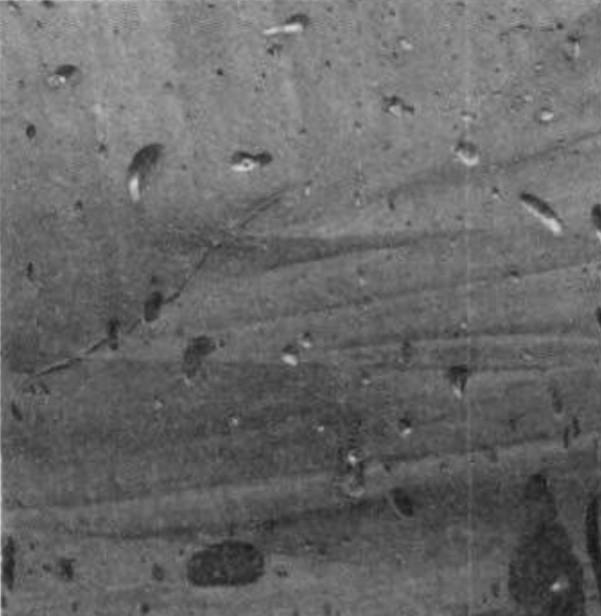
Answer: When the two-component sealant is mixed manually or machine-mixed without vacuuming, there will definitely be bubbles in the colloid; if a two-component sealant machine is used and the air in the upper part of the bucket is not discharged after changing the bucket, the sealant will The air is blown out together with the sealant, and small bubbles will also be formed in the colloid; air leakage in the pipeline of the sealant application equipment will sometimes introduce bubbles.
3. What are the requirements for the optimal construction environment for silicone sealant?
Answer: The best construction environment for silicone sealants is a clean environment of 10 to 40°C and a relative humidity of 40% to 60%. If the surface temperature of the material is too high (above 50°C), the curing reaction of the silicone sealant may be too fast. The small molecular substances generated by the reaction have no time to migrate out of the colloid surface and gather inside the colloid to form bubbles, thereby destroying the surface beauty of the sealant joint. If the temperature is too low, the curing speed of the silicone sealant will be slower, and the curing process will be significantly prolonged. During this process, the material may expand or contract due to the temperature difference, causing appearance changes.
4. Under what circumstances does silicone sealant cure slowly?
Answer: One-component silicone sealant is cured by reacting with moisture in the air. It is cured from the outside to the inside.
(1) Curing is slow when the ambient temperature and humidity are low;
(2) Applying sealant too thickly may also cause the deep silicone to fail to solidify. It is not recommended that the thickness of single-component construction exceed 12mm;
(3) In a relatively closed environment, the curing of the sealant will be relatively slow.
Two-component silicone sealant is made by mixing components A and B, and the colloid solidifies inside and outside at the same time.
(1) The curing speed of the two-component is mainly related to the temperature and mixing ratio. The amount of component B is small and the curing is slow;
(2) Problems with the sealant equipment may cause the mixing ratio of components A and B to be abnormal. If component B becomes less, the two-component curing will be slow;
(3) The construction environment temperature is too low, resulting in slow curing.
5. Under what circumstances can silicone sealant discolor easily?
Answer: (1) Silicone sealant is incompatible with accessories during actual use, resulting in discoloration; therefore, before construction, accessories in contact with the sealant need to comply with the requirements of GB16776 "Silicone Structural Sealant for Construction". Do compatibility testing before construction.
(2) Contact with acidic and alkaline substances such as oxalic acid and other exterior wall cleaning solvents can easily cause the silicone sealant to discolor.
6. There is a color difference between the color sealant and the aluminum plate. What is the reason?
Answer: Small color differences are unavoidable. The color mixing process of color sealant and aluminum plate is different, so it is difficult to achieve completely consistent colors: (1) During production, differences in carbon black or pigment batches will cause color differences; (2) Light , the degree of curing of the sealant, the state of the sealant, the sensitivity of the naked eye to color, and many other aspects will affect people's judgment of color; (3) sealants with too bright colors, such as red, are difficult to match, and the colors of color matching samples are inaccurate; (4) ) The color matching sealant will naturally age and change color outdoors.
Prev : What kind of sealant should be used in kitchen and bathroom?
Next : What is suitable for bonding with modified silane sealant?
Related Articles
Quality Control in Sealant & Waterproof Coating Manufacturing | From Raw Materials to Finished Products
What Is No More Nails? No More Nails vs Silicone Sealant Explained
Silicone Sealant Yellowing: How to Avoid Discoloration in Clear Caulk
What Is No More Nails? Uses, Strength & How to Apply It
Floor Adhesives: A Comparative Guide to Acrylic, MS, and Polyurethane
You May Also Like
-
top Reco Quality Control in Sealant & Waterproof Coating Ma...

-
top Reco What Is No More Nails? No More Nails vs Silicone S...
nail free glue 
-
top Reco Silicone Sealant Yellowing: How to Avoid Discolora...
silicone sealant 
-
top Reco Which sealant is more mold resistant polyurethane ...
silicone sealant acrylic sealant pu sealant 
-
MS Polymer Wood Flooring Adhesive: Product Selecti...

-
Polyurethane waterproof concrete sealant Types: 1K...
construction materials Polyurethane sealant Factory & Manufacturer 
 Tina
Tina Tina
Tina
