

English
- English
- Русский
TENGYU DYNAMIC
Specializing in silicone adhesive and sealant research and development, production, sales in one of the national high-tech enterprises

How to choose prefabricated building joint sealant?
2024-04-07 10:49:47
Click:
“
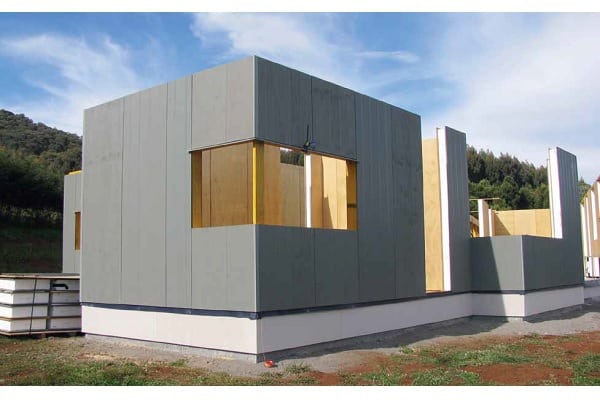
Due to the structural characteristics of prefabricated buildings, there will be a large number of joints on the interior and exterior walls. As the first line of defense for waterproofing in prefabricated buildings - the quality of prefabricated building joint sealants is particularly important.
”
How to scientifically select prefabricated building joint sealants?
1. Strong bonding
For sealants, the bonding performance with concrete, steel, etc. is a key factor in measuring their quality.
challenge:
At present, the common prefabricated panels in the domestic market are mainly made of concrete materials (PC panels), which are porous, alkaline, and easily absorbent base materials, which are not conducive to the bonding of sealants.
During the prefabrication of PC boards, a release agent is used. The release agent remains on the surface of the PC board, which is not conducive to the adhesion of the sealant.
Solution:
MS sealant has excellent adhesion to most building base materials such as concrete and steel. There will be no interface damage when immersed in water or when the joints undergo displacement changes.
2. High resistance to displacement
When the sealant is used as a joint sealant for the exterior wall of a prefabricated building, it may cause cracking and debonding due to displacement changes in the size of the joint. Therefore, the sealant must have good resistance to displacement.
challenge:
When sealants are used as joint sealant for exterior walls of prefabricated buildings, they may encounter the following situations: thermal expansion and contraction due to changes in ambient temperature, causing changes in joint size; plate displacement caused by wind loads, earthquakes, etc.; foundation settlement caused by settlement displacement.
Solution:
In order to prevent cracking and debonding caused by the poor displacement ability of the sealant, a low-modulus weather-resistant building sealant with a displacement capacity of not less than 25% should be used. In other words, the MS sealant with low modulus is easy to stretch and will not cause damage to the substrate interface.
3. UV aging resistance
Since the sealant is completely exposed to the outdoor environment, the colloid is prone to aging and deformation under the influence of wind, rain, ultraviolet light and other factors. The service life of the sealant directly affects the service life of the building. Therefore, the sealant used needs to have good UV aging resistance.
challenge:
Ordinary polyurethane sealants are prone to gradually losing their bonding and waterproofing properties under damage, causing aging phenomena such as yellowing and fine lines.
Solution:
MS sealant is more resistant to erosion, will not appear yellowing, fine lines and other aging phenomena, and can meet long-term outdoor use.
4. Good applicability
The finishing property mainly considers the compatibility of the sealant and the architectural coating, and can be painted and colored according to the needs of the site.
challenge:
The surface of silicone sealant cannot be decorated with paint, which will affect the overall aesthetics of the exterior wall of the prefabricated building.
Solution:
MS sealant has good compatibility with most coatings and good adhesion. It is significantly better than silicone sealant in painting properties. It can achieve uniform color of the exterior walls of prefabricated buildings and maintain the beauty of the building.
Related Articles
Quality Control in Sealant & Waterproof Coating Manufacturing | From Raw Materials to Finished Products
What Is No More Nails? No More Nails vs Silicone Sealant Explained
Silicone Sealant Yellowing: How to Avoid Discoloration in Clear Caulk
What Is No More Nails? Uses, Strength & How to Apply It
Floor Adhesives: A Comparative Guide to Acrylic, MS, and Polyurethane
You May Also Like
-
top Reco Quality Control in Sealant & Waterproof Coating Ma...

-
top Reco What Is No More Nails? No More Nails vs Silicone S...
nail free glue 
-
top Reco Silicone Sealant Yellowing: How to Avoid Discolora...
silicone sealant 
-
top Reco Which sealant is more mold resistant polyurethane ...
silicone sealant acrylic sealant pu sealant 
-
Hydrophilic Waterstop Polyurethane Sealant for Con...

-
MS Polymer Wood Flooring Adhesive: Product Selecti...


 Tina
Tina Tina
Tina
