

English
- English
- Русский
TENGYU DYNAMIC
Specializing in silicone adhesive and sealant research and development, production, sales in one of the national high-tech enterprises

Functional Characteristics of Acrylic Sealant
2025-06-30 09:46:06
Click:
“
Acrylic sealant, a polymer-based material with acrylic acid derivatives as its core component, exhibits distinct functional properties that make it indispensable in construction and industrial applications.
”
Acrylic sealant, a polymer-based material with acrylic acid derivatives as its core component, exhibits distinct functional properties that make it indispensable in construction and industrial applications.
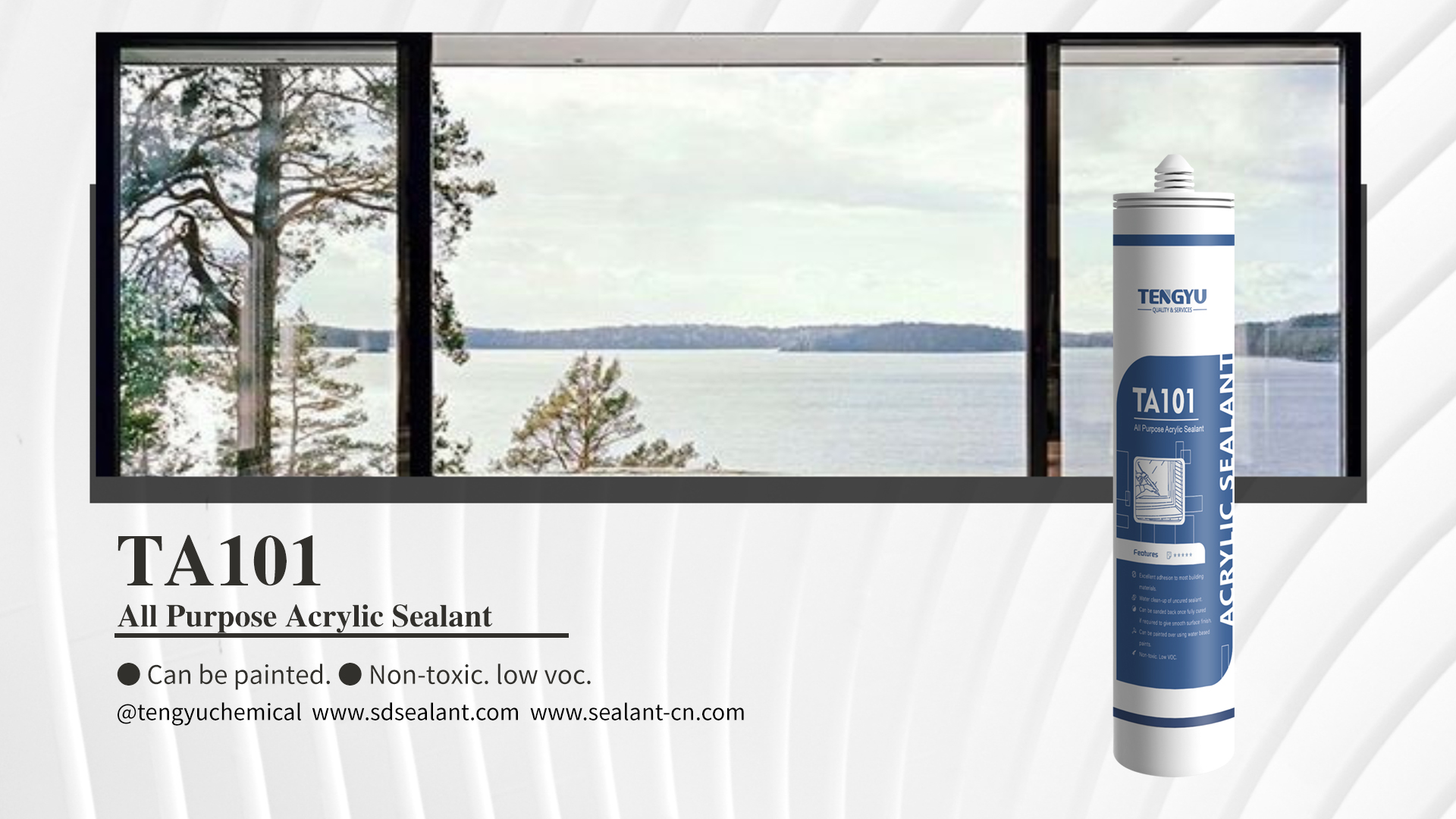
Below is a detailed analysis of its key characteristics:
1. Adhesion to Multiple Substrates
Versatile Bonding: Acrylic sealants adhere strongly to diverse materials, including wood, metal, concrete, glass, and plastics. This eliminates the need for specialized primers in most cases.
Applications: Used for sealing gaps in aluminum windows, stone facades, and tile installations, ensuring airtight and watertight joints.
2. Paintability and Aesthetic Flexibility
Surface Compatibility: Unlike silicone sealants, acrylic variants can be painted over with water-based or solvent-based paints, enabling seamless integration into architectural designs.
Color Matching: Available in white, clear, or tinted formulations, they blend with surrounding surfaces for a cohesive finish.
3. Environmental and Safety Compliance
Low VOC Emissions: Acrylic sealants emit fewer volatile organic compounds (VOCs) compared to solvent-based alternatives, meeting indoor air quality standards like GREENGUARD Certification.
Non-Toxic Formulations: Water-based acrylic sealants (e.g., latex-based variants) are safe for use in schools, hospitals, and food-processing facilities.
4. Ease of Application and Tooling
User-Friendly: Acrylic sealants are single-component, ready-to-use products that cure at room temperature. They can be applied with standard caulking guns and tooled smoothly for a professional finish.
Fast Curing: Surface drying occurs within 30 minutes (e.g., BM-310), enabling rapid project turnover.
5. Cost-Effectiveness
Affordability: Acrylic sealants are generally cheaper than silicone or polyurethane alternatives, making them a budget-friendly choice for large-scale projects.
Longevity: While not as durable as silicone in extreme conditions, acrylic sealants offer a 10–15-year service life in moderate climates, balancing cost and performance.
Applications
Suitable for sealing low movement joints around brick,concrete, plasterboard, windows, doors, ceramic tiles and filling of cracks prior to painting. Adheres to glass, wood, aluminum, brick, concrete, plasterboard, ceramic and painted surfaces.
Prev : Why MS Polymer for Prefabricated Buildings Is the Future of Construction?
Next : Advantages of Using Silicone Waterproof Coatings on Roofs
Related Articles
Quality Control in Sealant & Waterproof Coating Manufacturing | From Raw Materials to Finished Products
What Is No More Nails? No More Nails vs Silicone Sealant Explained
Silicone Sealant Yellowing: How to Avoid Discoloration in Clear Caulk
What Is No More Nails? Uses, Strength & How to Apply It
Floor Adhesives: A Comparative Guide to Acrylic, MS, and Polyurethane
You May Also Like
-
top Reco Quality Control in Sealant & Waterproof Coating Ma...

-
top Reco What Is No More Nails? No More Nails vs Silicone S...
nail free glue 
-
top Reco Silicone Sealant Yellowing: How to Avoid Discolora...
silicone sealant 
-
top Reco Which sealant is more mold resistant polyurethane ...
silicone sealant acrylic sealant pu sealant 
-
MS Polymer Wood Flooring Adhesive: Product Selecti...

-
Polyurethane waterproof concrete sealant Types: 1K...
construction materials Polyurethane sealant Factory & Manufacturer 
 Tina
Tina Tina
Tina
