

English
- English
- Русский
TENGYU DYNAMIC
Specializing in silicone adhesive and sealant research and development, production, sales in one of the national high-tech enterprises

How to identify sealant and glass glue?
2023-03-21 12:17:02
Click:
“
Glass glue is a general term, silicone glue and polyurethane glue can be commonly known as glass glue. Sealant is distinguished from the performance, the main role is to seal.
”
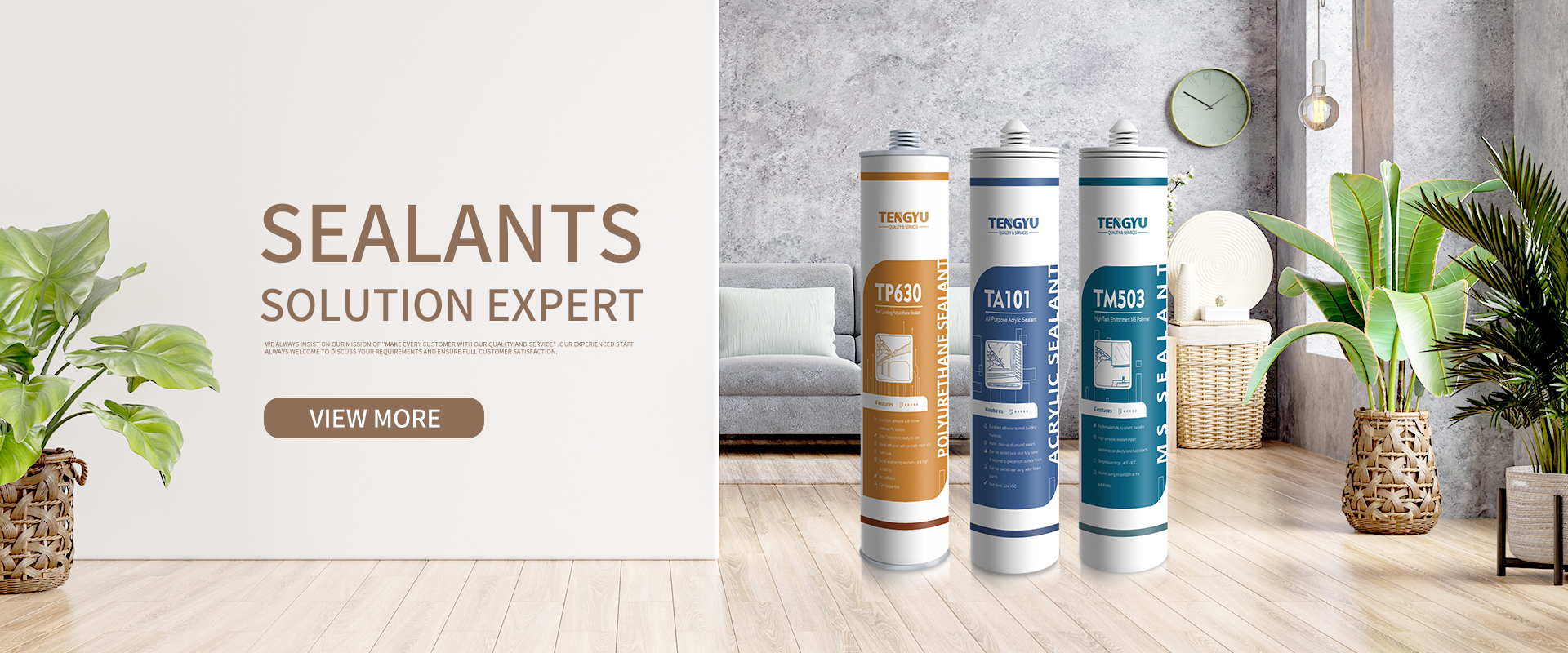
Sealant and glass glue are used more and more widely in construction engineering, but many people can not tell the difference between sealant and glass glue.
1.Sealant
--Sealant is a sealing surface shape and deformation, not easy to flow, there is a certain adhesive sealing material. It is an adhesive used to fill the gap of the configuration and play the role of sealing. It has the function of leakage proof, water proof, vibration proof, sound insulation and heat insulation.
--Usually with bitumen, natural resin or synthetic resin, natural rubber or synthetic rubber and other dry or non-dry viscous materials as the base material; With talc, white clay, carbon black, titanium dioxide and asbestos and other inert fillers, and then add plasticizer, solvent, curing agent, accelerator, etc.
2.Classification of sealant
--Sealant can be divided into elastic sealant, liquid sealing pad material and sealing putty three categories.
--According to the chemical composition classification, can be divided into rubber type, resin type, oil-based and natural polymer sealant. This classification can be more polymer material characteristics speculated that its warmth, sealing and adaptability to a variety of media.
--Resin type: this kind of sealant is based on resin. Commonly used resins are epoxy resin, unsaturated polyester resin, phenolic resin, polyacrylic resin, polyvinyl chloride resin and so on.
--According to the application classification, it can be divided into high temperature resistant type, cold resistant type, pressure resistant type, etc.
--According to the classification of film formation characteristics, it can be divided into dry attachment type, dry stripping type, non-dry viscous type and semi-dry viscoelastic type, which is also the common classification of sealant in China.
--According to the use of classification, can be divided into building sealant, vehicle sealant, insulation (sealant, sealant for packaging, mineral sealant and other types.
--According to the performance classification after construction, can be divided into curing sealant and semi-curing sealant two kinds, which can be divided into rigid and flexible sealant, rigid sealant vulcanization or solidification after the formation of solid, rarely elastic, can not bend, usually the joint is not movable; Flexible sealant has elasticity and softness after vulcanization. Non-curing sealant is a soft solidification sealant after construction remains non-dry tackifying agent continues to migrate to the surface.
3.Classification of glass glue
Glass glue is a material for bonding and sealing all kinds of glass with other substrates.
Single and two component classification silicone glass glue from the product packaging can be divided into two categories: single component and two components. One component of silicone glue, its curing is by contact with the moisture in the air and produce physical properties change; Two-component refers to the silicone rubber is divided into A, B two groups, any group alone can not form curing, but the two groups of glue once mixed will produce curing. Single component silicone glass glue is common on the market.
Acid-base classification silicone glass glue according to acid-base properties are divided into acid glue and neutral glue. Acidic glass glue is mainly used for general bonding between glass and other building materials. Neutral glue overcomes the characteristics of acid glue corrosion of metal materials and reaction with alkaline materials, so it has a wider range of application, and its market price is slightly higher than acid glue. A special kind of neutral glass glue on the market is silicone structural sealant. Because it is directly used for the metal and glass structure or non-structural bonding assembly of the glass curtain wall, the quality requirements and product grade are the highest in the glass glue, and the market price is also the highest.
Silicone glass glue has a variety of colors, commonly used colors are black, porcelain white, transparent, silver gray, gray, bronze six. Other colors can be customized according to customer requirements.
Weather-resistant silicone sealant is suitable for all kinds of curtain wall weather-resistant sealing, especially recommended for glass curtain wall, aluminum plate curtain wall, stone dry hanging weather-resistant sealing. Weather-resistant sealant suitable for metal, glass, aluminum, ceramic tiles, plexiglas, coated glass seam sealing; Waterproof silicone sealant concrete, cement, masonry, rock, marble, steel, wood, anodized aluminum and painted aluminum surface joint seal. In most cases, no primer is needed. Mildew proof silicone sealant is the trend of the future. The silicone sealant with mildew proof effect is longer than the general glue, more firm and not easy to fall off. It is especially suitable for some humid and easy to grow mold environments, such as bathroom and kitchen.
4.The difference between sealant and glass glue
--Glass glue: is a general term. Silicone glue, polyurethane glue can be commonly known as glass glue.
--Sealant: is distinguished from the performance, the single finger function is sealing, weather resistant glue, silicone structural glue and polyurethane glue have sealing effect, but has other very important role, such as bonding strength, good weather resistance.
--The main use of sealant is to seal the gap. Glass glue is generally used in sealing, and is used for waterproof of kitchen and bathroom. After the use of glass glue, the window should be ventilated to avoid inhaling air in a short time.
Related Articles
Quality Control in Sealant & Waterproof Coating Manufacturing | From Raw Materials to Finished Products
What Is No More Nails? No More Nails vs Silicone Sealant Explained
Silicone Sealant Yellowing: How to Avoid Discoloration in Clear Caulk
What Is No More Nails? Uses, Strength & How to Apply It
Floor Adhesives: A Comparative Guide to Acrylic, MS, and Polyurethane
You May Also Like
-
top Reco Quality Control in Sealant & Waterproof Coating Ma...

-
top Reco What Is No More Nails? No More Nails vs Silicone S...
nail free glue 
-
top Reco Silicone Sealant Yellowing: How to Avoid Discolora...
silicone sealant 
-
top Reco Which sealant is more mold resistant polyurethane ...
silicone sealant acrylic sealant pu sealant 
-
MS Polymer Wood Flooring Adhesive: Product Selecti...

-
Polyurethane waterproof concrete sealant Types: 1K...
construction materials Polyurethane sealant Factory & Manufacturer 
 Tina
Tina Tina
Tina
