

English
- English
- Русский
TENGYU DYNAMIC
Specializing in silicone adhesive and sealant research and development, production, sales in one of the national high-tech enterprises

Classification of sealant and introduction of sealing mechanism
2023-06-08 09:00:00
Click:
“
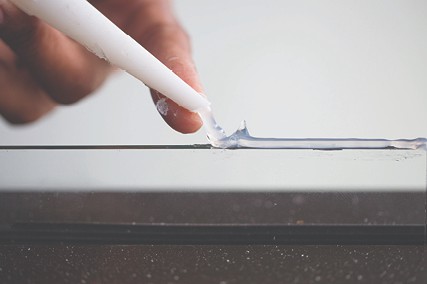
Sealant is a new type of polymer sealing material used for static sealing parts of mechanical products, also known as liquid gasket. It can be easily filled in the gaps of joints such as flanges, valves, elbows, joints, sockets, cylinders and threaded joints with complex joint surfaces, forming uniform, continuous and stable peelability or stickiness, The viscoelastic film prevents the leakage of the fluid medium and acts as a sealing gasket.
”
Classification of sealant and introduction of sealing mechanism
Sealant is a new type of polymer sealing material used for static sealing parts of mechanical products, also known as liquid gasket. It can be easily filled in the gaps of joints such as flanges, valves, elbows, joints, sockets, cylinders and threaded joints with complex joint surfaces, forming uniform, continuous and stable peelability or stickiness, The viscoelastic film prevents the leakage of the fluid medium and acts as a sealing gasket. The sealant is neither coated on the surface of the machine like a paint to protect it, nor does it rely on the bonding force of the sealant to sealant the parts of the equipment together like a sealant. Instead, it is used as a sealing filler and added to the parts of the equipment. Sealing between joint surfaces. The sealant has fluidity, and there is no compression deformation necessary for solid gaskets to seal, so there are no factors that cause leakage such as internal stress, relaxation, creep, and elastic fatigue damage. Sealant is generally liquid or paste, has good sealing performance, and good heat resistance, pressure resistance, oil resistance, chemical reagent resistance and other characteristics, easy to use, cheap, so it is widely used in various industries.
Classification of sealants
There are two main types of sealants, liquid sealants and anaerobic sealants. Sealants can usually be classified according to chemical composition, scope of application, curing characteristics, strength and coating film characteristics. Among them, according to the chemical composition, that is, the polymer materials used in the base material are classified: (1) Resins such as epoxy resins, polyurethanes, etc. (2) Rubber such as nitrile rubber, polysulfide rubber, etc. (3) Mixed types such as polysulfide rubber and phenolic resin, neoprene rubber and alkyd resin, etc. (4) Natural polymers such as shellac, gum arabic, etc. According to this classification, the chemical and physical properties such as heat resistance, mechanical strength, and medium resistance of the sealant can be inferred based on the properties of the polymer material.

The sealing mechanism of the sealant
A seal is obtained by caulking the gaps in the joint. Sealant is an ideal stuffing agent, it has good filling, fit, wetting, film-forming, adhesion, impermeability and chemical properties, etc., it can easily fill the joint surface gap, block leakage and Get a good seal. There are often microscopic unevenness on the surface of the joint. When filling with sealant (liquid gasket), due to its good wetting ability, it is easy to fill and paste the unevenness on the joint surface, blocking the fluid channel and achieving a tight seal. Purpose. When using a non-adhesive solid gasket, even if the fastening force is large, it is difficult to fill the microscopic unevenness. Under the long-term action of the fastening force, the gasket will produce permanent deformation, creep, and the resilience will become smaller, and the fluid medium will leak out from the joint surface.
Due to the different formulations of sealants, the sealing principles are also different. Two different sealing mechanisms are introduced below.
1. Sealing mechanism of semi-dry viscoelastic and non-drying sealants
The final state of this type of sealant between joints is a viscous substance. However, liquid substances are incompressible, and the sealing layer in the form of a liquid film leaks, usually due to internal pressure that squeezes the sealant from the joint surface. This kind of leakage is called viscous flow leakage. According to the viscous incompressible flow theory of fluid mechanics, the leakage rate of the medium through the sealing layer can be calculated as follows:

In the formula, Q——the flow rate of the sealant in the gap (Q>0 means leakage);
k—coefficient; h—gap size; n—constant (n>1); η—viscosity of sealant; L—length of sealing gap joint surface; ∆p—pressure difference inside and outside the sealing surface. It can be seen from the above formula that the greater the viscosity η of the sealant (here refers to the viscosity of the final state after the sealant is applied), the better the sealing performance; the smaller the gap h of the joint surface (here refers to the nominal value of the gap), the more conducive to sealing ; The greater the length L of the joint surface of the sealing gap, the smaller the leakage rate.
2. Sealing mechanism of dry-curing and dry-peeling sealants
This type of sealant is uniform viscous liquid before use, and once the solvent volatilizes after application, it becomes a dry thin layer or elastic solid film, which firmly adheres to the joint surface. Their shape during use is somewhat similar to that of solid gaskets, so the sealing mechanism can be explained by combining the analysis of solid gaskets. The difference is that the sealant is sealed by filling the unevenness of the sealing surface by infiltration in liquid state. , At the same time, there is also the adhesion between the sealant and the sealing surface and the cohesion of the sealant itself during the curing process. Therefore, the sealing of the cured sealant is the result of the combined effects of wetting, adhesion and cohesion.
Prev : How to choose door and window sealant?
Next : Do you know the tips of using silicone sealant in summer?
Related Articles
Quality Control in Sealant & Waterproof Coating Manufacturing | From Raw Materials to Finished Products
What Is No More Nails? No More Nails vs Silicone Sealant Explained
Silicone Sealant Yellowing: How to Avoid Discoloration in Clear Caulk
What Is No More Nails? Uses, Strength & How to Apply It
Floor Adhesives: A Comparative Guide to Acrylic, MS, and Polyurethane
You May Also Like
-
top Reco Quality Control in Sealant & Waterproof Coating Ma...

-
top Reco What Is No More Nails? No More Nails vs Silicone S...
nail free glue 
-
top Reco Silicone Sealant Yellowing: How to Avoid Discolora...
silicone sealant 
-
top Reco Which sealant is more mold resistant polyurethane ...
silicone sealant acrylic sealant pu sealant 
-
MS Polymer Wood Flooring Adhesive: Product Selecti...

-
Polyurethane waterproof concrete sealant Types: 1K...
construction materials Polyurethane sealant Factory & Manufacturer 
 Tina
Tina Tina
Tina
