

English
- English
- Русский
TENGYU DYNAMIC
Specializing in silicone adhesive and sealant research and development, production, sales in one of the national high-tech enterprises

Do you know the tips of using silicone sealant in summer?
2023-06-09 11:05:00
Click:
“
Summer is coming now, high temperature and sun exposure are inevitable. In such
”
Summer is coming now, high temperature and sun exposure are inevitable. In such a hot environment, some problems often occur when using construction silicone sealant, such as blistering, especially neutral glass sealant. Why is sealant easier to blister in summer? How to avoid it? Knowing the cause of blistering, you will know how to apply construction silicone sealant.

There are generally three reasons for the blistering of sealant in summer, and specific solutions are attached.
1. 'Wet base material' causes blistering of sealant injection
It is rainy in the south in summer. If the construction is carried out outdoors after the rainfall, the sealant will be injected directly inside the interface when it is wet. The relatively soft sealant seam will bulge and blister, and sometimes the polyethylene foam pad rod will cause the sealant seam to blister.
Solution: Do not blindly seek the progress during construction, and wait until the inside of the interface is dry before injecting sealant to avoid it.
2. 'The temperature of the base material is too high' leads to blistering of the injection sealant
In the high temperature in summer, the surface temperature of the construction substrate will be high, and when the silicone adhesive is cured, the temperature of the bonded material should not exceed 50°C. Once the sealant is injected when the surface temperature of the base material exceeds 50°C, it will cause blistering in the sealant seam. This situation will be encountered in the weather-resistant caulking of the metal panel curtain wall.
In the hot summer, when the sun exposes the metal plate, especially the surface temperature of the aluminum plate will reach 80°C, the sealant injection at this time will easily cause the sealant seam to bubble.
Solution: Construction should be done in the evening or on cloudy days to avoid foaming caused by high substrate temperature.
3. 'Uncured glass sealant exposed to the sun' causes blistering of the sealant injection
Generally, silicone sealant cannot be exposed to the sun before it is cured, especially if it is exposed to the sun immediately after the sealant is injected, it will cause honeycomb bubbles inside the sealant joint, which will cause the outside of the sealant joint to bulge. It will be more obvious when silicone sealant is used.
In hot summer construction, this kind of situation is easy to occur. It is recommended to avoid sun exposure when injecting sealant to alleviate the blistering phenomenon.
Solution: inject sealant on the west or north side of the building in the morning, and inject sealant on the east or south side of the building in the afternoon. After the sealant is injected in this way, the sealant has been cured for a period of time, and the surface layer has crusted. When the sun is exposed again, it has a certain resistance, and the blistering phenomenon will be alleviated to some extent.
Related Articles
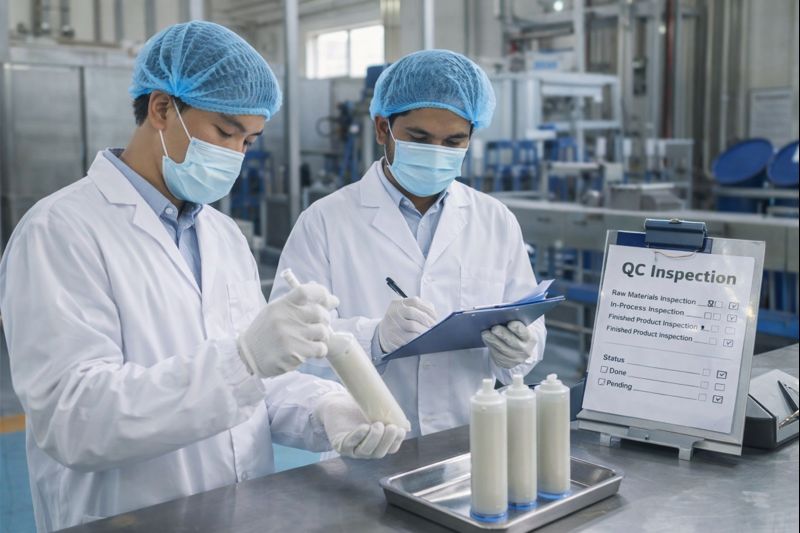
Quality Control in Sealant & Waterproof Coating Manufacturing | From Raw Materials to Finished Products
What Is No More Nails? No More Nails vs Silicone Sealant Explained
Silicone Sealant Yellowing: How to Avoid Discoloration in Clear Caulk
What Is No More Nails? Uses, Strength & How to Apply It
Floor Adhesives: A Comparative Guide to Acrylic, MS, and Polyurethane
You May Also Like
-
top Reco Quality Control in Sealant & Waterproof Coating Ma...

-
top Reco What Is No More Nails? No More Nails vs Silicone S...
nail free glue 
-
top Reco Silicone Sealant Yellowing: How to Avoid Discolora...
silicone sealant 
-
top Reco Which sealant is more mold resistant polyurethane ...
silicone sealant acrylic sealant pu sealant 
-
Polyurethane waterproof concrete sealant Types: 1K...
construction materials Polyurethane sealant Factory & Manufacturer 
-
Custom Color Constrcution Sealants: Matching Your ...
silicone sealant acrylic sealant Ms sealant pu sealant 
 Tina
Tina Tina
Tina
