

English
- English
- Русский
TENGYU DYNAMIC
Specializing in silicone adhesive and sealant research and development, production, sales in one of the national high-tech enterprises

What should we pay attention to when applying sealant in winter?
2023-11-14 10:02:02
Click:
“
1. Reduced extrudabilityExtrudability indicates the ease of dispensing the seala
”
1. Reduced extrudability
Extrudability indicates the ease of dispensing the sealant during application. sealant that is too thick will have poor extrudability, and it will be laborious to apply sealant during use. However, if the sealant is made too thin based solely on extrudability, it will affect the thixotropy of the sealant.
Usually the extrudability of silica gel is between 30-60, which can keep the sealant relatively easy to sealant and can also maintain good thixotropic properties of the colloid.
Problems with construction in autumn and winter:
The sealant will gradually thicken and become less fluid as the temperature decreases. For construction, the pressure of the sealant gun to extrude the sealant is increased, and manual operation will be time-consuming and laborious.
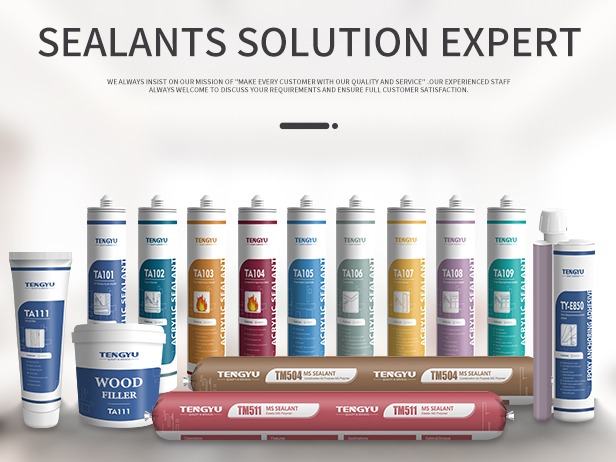
solution:
Thickening at low temperatures is a normal phenomenon and does not require improvement if it does not affect construction efficiency.
If you want to improve construction efficiency, you can consider using some auxiliary heating measures to increase the trial temperature of the sealant, such as storing the sealant in a heated or air-conditioned room in advance, or trial heating equipment in the construction environment; you can also trial a large thrust Manual sealant gun or pneumatic sealant gun or electric sealant gun to improve construction efficiency.
2.Slow curing
Single-component sealants for doors and windows are hygroscopic and curing types. They require water vapor in the air to react to cure. The curing process is affected by both ambient temperature and humidity conditions. The lower the ambient temperature and humidity, the slower the sealant cures.
Problems with construction in autumn and winter:
In autumn and winter, when the temperature drops and the climate is dry and humid, the curing speed of the sealant may slow down significantly.

solution:
It is recommended that heating and humidification measures be used during the construction process to improve indoor temperature and humidity conditions and speed up the curing speed of the sealant.
If the construction environment cannot be improved, it is recommended to conduct a trial before use to confirm that the sealant can cure normally and the curing time is acceptable, so as to avoid affecting the construction period due to curing speed.
3. Poor adhesion
The adhesion to the base material is a very important performance in the actual use of the sealant. The sealant must have good adhesion to the actual base material before it can be used.
Problems with construction in autumn and winter:
Generally, the application process of sealant will specify the construction temperature range. If the minimum temperature requirement of the product is exceeded, the bonding speed will be significantly slowed down, and the time for complete bonding with the base material will be significantly extended.
At the same time, when the temperature is too low, the wettability of the surface of the sealant and the base material is reduced, and there may be imperceptible fog or frost on the surface of the base material, which will affect the adhesion between the sealant and the base material.
solution:
It is recommended that heating measures be used during the construction process to improve indoor temperature conditions and appropriately extend the maintenance time.
If the construction environment cannot be improved, when the temperature is lower than the minimum construction temperature of the sealant, conduct an adhesion test between the sealant and the base material in the actual construction environment to confirm that the bonding is good before construction.
4. Dwelling and wrinkling
After the sealant application is completed, the surface will appear uneven, which we call "bulging" or "wrinkling".
However, the bulging on the surface only affects the smoothness of the appearance of the sealant joint. The inside is solid and will not affect the long-term sealing performance of the sealant.
Problems with construction in autumn and winter:
Especially in autumn, the temperature difference between day and night is large. In a low-temperature environment, the sealant cures slowly, and it takes a long time to cure to a sufficient depth. The construction panel is affected by temperature expansion and contraction, which will cause the width of the sealant joint to change, thus affecting the sealant joint. On the surface, "bulging" and "wrinkling" phenomena appear.

solution:
Choosing a suitable time for construction, such as construction after the panels have been exposed to sunlight, can improve the bulging phenomenon. Do not construct when the surface temperature of the panel is low. If exposed to sunlight for a short period of time after gluing, the panel will expand due to heat and squeeze the sealant joints, which may easily cause the sealant joints to bulge.
Appropriate shading measures can be used after construction to prevent the panels from being directly exposed to the sun and reduce temperature differences that may lead to deformation of the sealant joints. It is not recommended to re-apply sealant after tapping the drum sealant seam.
The temperature is gradually dropping, so don’t forget to put on more clothes. At the same time, it brings inconvenience to sealant construction. I hope to pay attention to the precautions for winter sealant construction to ensure good construction quality and warm households in the cold autumn and winter!
Related Articles
Quality Control in Sealant & Waterproof Coating Manufacturing | From Raw Materials to Finished Products
What Is No More Nails? No More Nails vs Silicone Sealant Explained
Silicone Sealant Yellowing: How to Avoid Discoloration in Clear Caulk
What Is No More Nails? Uses, Strength & How to Apply It
Floor Adhesives: A Comparative Guide to Acrylic, MS, and Polyurethane
You May Also Like
-
top Reco Quality Control in Sealant & Waterproof Coating Ma...

-
top Reco What Is No More Nails? No More Nails vs Silicone S...
nail free glue 
-
top Reco Silicone Sealant Yellowing: How to Avoid Discolora...
silicone sealant 
-
top Reco Which sealant is more mold resistant polyurethane ...
silicone sealant acrylic sealant pu sealant 
-
Hydrophilic Waterstop Polyurethane Sealant for Con...

-
MS Polymer Wood Flooring Adhesive: Product Selecti...

 Tina
Tina Tina
Tina
