

English
- English
- Русский
TENGYU DYNAMIC
Specializing in silicone adhesive and sealant research and development, production, sales in one of the national high-tech enterprises

An article to help you quickly understand construction sealants
2024-03-08 11:08:05
Click:
“
How to choose sealant is the key. The selection of building sealant is mainly based on its performance characteristics, as follows: concrete bonding, joint displacement, and weather resistance.
”
Selection of building sealant:
How to choose sealant is the key. The selection of building sealant is mainly based on its performance characteristics, as follows:
1. Concrete bonding
Most of the PC boards used on the market are concrete boards, so the building sealant should have good adhesion to concrete. When choosing a building sealant, you should consider whether concrete is an alkaline porous material and whether the release agent used during demoulding remains on the surface of the PC board.
2.Seam displacement
When choosing a sealant, its mechanical properties are also important. The displacement of the joint should be considered during design and the width of the joint should be determined so that the deformation of the sealant is within the maximum allowable range. Sealants are generally required to have good displacement capabilities and elastic recovery rates to adapt to joint displacement.
3. Weather resistance
The weather resistance of building sealants will affect their service life. Due to the specific molecular structure of silicone sealants, even the highest energy ultraviolet rays are not enough to damage its structure, ensuring that silicone sealants have good UV resistance. , giving it obvious advantages in weather resistance.
Construction technology of building sealant:
1. Pre-construction test
Construction sealants should undergo bonding performance tests and compatibility tests before construction to avoid delays in construction and waste of materials and labor due to sealant tapping and rework after construction.
2. Construction preparation
Preparation → Press the metal shrapnel and pull the metal rod → Cut the soft sealant → Inject sealant and bond → Put the cut sealant into the sealant bucket → Place the sealant nozzle and tighten the front cover → Apply sealant.

3. Frequently Asked Questions
(1) Not bonded to the base material
The main reasons are that no adhesion test was conducted before construction, the curing temperature was too low, and the relative humidity was too high. During construction, the curing temperature should be increased, the curing time should be extended, the base material should be surface treated or the sealant should be replaced.
(2)Slow curing speed
The main reasons are low ambient temperature and low humidity, the sealant gap is too narrow and too deep, the sealant has expired, etc. During construction, the curing temperature and humidity should be increased, sealant should be applied twice or on both sides, and the sealant should be replaced.
(3) Bubbles are generated
The main reasons are that air enters during sealant injection, moisture intrudes into the sealant joints, the base material reacts with certain sealants, etc. During construction, the sealant should be injected evenly, continuously, and the interface should be filled, and the interface and accessory materials must be dry.
(4) Drumming
The main reasons are that the large size of the plate and the large expansion coefficient lead to joint deformation, the large temperature difference between day and night in the plate, and the low ambient humidity. During construction, a sealant with a relatively fast curing speed should be used, and appropriate shading measures should be used to reduce the panel temperature.
(5)Cracking and leaking
The main reasons are that the joints are too narrow, the sealing is not in place, the sealant has insufficient displacement capacity, and the sealant thickness is too thin. During construction, joints should be designed according to specification requirements, sealants with good displacement capabilities should be selected, and construction should be carried out according to operating specifications to ensure the thickness of the sealant and avoid three-sided bonding.
Therefore, choosing the right sealant is crucial.
Prev : Do you know about anaerobic adhesives?
Next : Reject "scumbag" projects, 5 tips to identify inferior "white oil sealant"
Related Articles
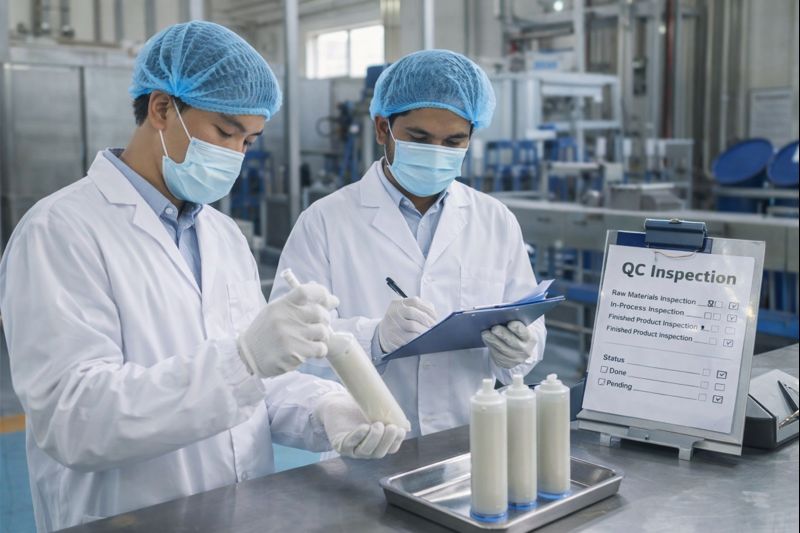
Quality Control in Sealant & Waterproof Coating Manufacturing | From Raw Materials to Finished Products
What Is No More Nails? No More Nails vs Silicone Sealant Explained
Silicone Sealant Yellowing: How to Avoid Discoloration in Clear Caulk
What Is No More Nails? Uses, Strength & How to Apply It
Floor Adhesives: A Comparative Guide to Acrylic, MS, and Polyurethane
You May Also Like
-
top Reco Quality Control in Sealant & Waterproof Coating Ma...

-
top Reco What Is No More Nails? No More Nails vs Silicone S...
nail free glue 
-
top Reco Silicone Sealant Yellowing: How to Avoid Discolora...
silicone sealant 
-
top Reco Which sealant is more mold resistant polyurethane ...
silicone sealant acrylic sealant pu sealant 
-
MS Polymer Wood Flooring Adhesive: Product Selecti...

-
Polyurethane waterproof concrete sealant Types: 1K...
construction materials Polyurethane sealant Factory & Manufacturer 
 Tina
Tina Tina
Tina
