

English
- English
- Русский
TENGYU DYNAMIC
Specializing in silicone adhesive and sealant research and development, production, sales in one of the national high-tech enterprises

Classification of sealants and introduction to sealing mechanism
2024-05-11 08:50:18
Click:
“
Silicone glue is an ointment-like material that solidifies into a tough, rubber-like solid once exposed to moisture in the air. It is mainly divided into deacetic acid type, dealcoholization type, deamination type, and depropylation type. Silicone glue is commonly known as glass glue because it is often used for bonding and sealing glass. One-component silicone glass glue is an ointment-like material that solidifies into a tough rubber-like solid material once exposed to moisture in the air.
”
Silicone sealant, commonly known as glass sealant, is a commonly used adhesive in construction. With the modernization of urban buildings, construction silicone sealants have been widely used in construction fields such as curtain walls, doors, windows, insulating glass, and interior decoration to play a bonding and sealing role. Today we will introduce in detail the classification and uses of construction silicone sealants.
The construction silicone sealants currently on the market are generally divided into four categories: silicone structural sealants, silicone structural weather-resistant sealants, ordinary silicone sealants, and special-purpose silicone sealants.
1.Silicone structural sealant
Usage: It is mainly used for the structural bonding of glass and aluminum sub-frames, and is also used in glass curtain wall projects and the secondary sealing of insulating glass in hidden frame curtain walls.
Features: It can withstand wind load, gravity load and tensile load, has strong adhesion, fast curing, and is resistant to aging. It is a high-modulus, high-elastic silicone rubber.
Note: For structural bonding and sealing of glass curtain walls, special silicone structural sealant that meets the design requirements of the glass curtain wall must be used. Do not use sealant that does not meet the design requirements of the glass curtain wall to avoid causing engineering accidents.
2.Silicone Weather Resistant Sealant
Purpose: Used for curtain wall joint sealing to ensure air tightness, water tightness and other properties.
Features: It needs to withstand large changes in joint width, has high requirements for elasticity and aging resistance, and does not require strength. It can be either high modulus or low modulus, and can also achieve long-term crack resistance.
Note: Since the deformation of curtain wall joints is relatively large, it is recommended to choose products with high displacement capacity. Products with high displacement capacity have better sealing durability.
3.Ordinary silicone sealant
Usage: Door and window joints, glass installation, exterior wall caulking and other location sealing.
Features: It can withstand changes in joint width, has certain displacement capacity requirements, does not require strength, and can achieve a permanent sealing effect.
Note: Products on the market vary from good to bad, so look for products that are formal and meet national standards.
4.Special purpose sealant
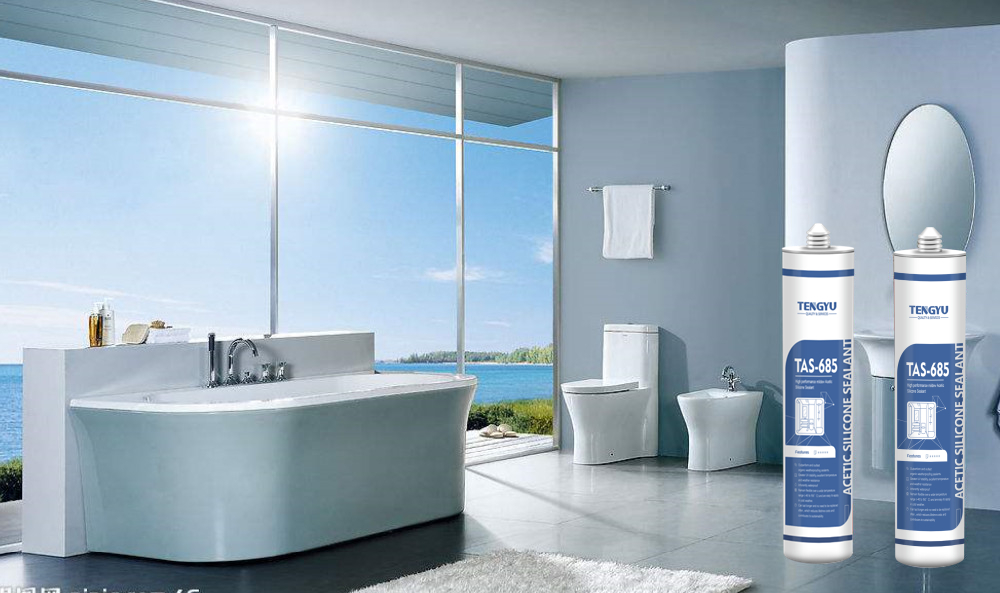
Purpose: Used for joint sealing with special requirements, such as mildew-resistant glass sealant for kitchen and bathroom ware, mirror glass sealant for metal-coated glass, etc.
Features: Anti-mold sealant must have anti-mold properties; mirror glass sealant cannot corrode the mirror coating, and is environmentally friendly and pollution-free.
Note: Use as required. For example, if there are anti-mildew requirements, use anti-mildew sealant. For stone bonding, use special stone sealant.
Prev : What types of sealants are commonly used in life?
Next : How to ensure effective bonding of silicone sealants?
Related Articles
Quality Control in Sealant & Waterproof Coating Manufacturing | From Raw Materials to Finished Products
What Is No More Nails? No More Nails vs Silicone Sealant Explained
Silicone Sealant Yellowing: How to Avoid Discoloration in Clear Caulk
What Is No More Nails? Uses, Strength & How to Apply It
Floor Adhesives: A Comparative Guide to Acrylic, MS, and Polyurethane
You May Also Like
-
top Reco Quality Control in Sealant & Waterproof Coating Ma...

-
top Reco What Is No More Nails? No More Nails vs Silicone S...
nail free glue 
-
top Reco Silicone Sealant Yellowing: How to Avoid Discolora...
silicone sealant 
-
top Reco Which sealant is more mold resistant polyurethane ...
silicone sealant acrylic sealant pu sealant 
-
Hydrophilic Waterstop Polyurethane Sealant for Con...

-
MS Polymer Wood Flooring Adhesive: Product Selecti...


 Tina
Tina Tina
Tina
