

English
- English
- Русский
TENGYU DYNAMIC
Specializing in silicone adhesive and sealant research and development, production, sales in one of the national high-tech enterprises

What is the difference between weather-resistant sealant and silicone structural adhesive?
2024-08-05 15:13:49
Click:
“
Silicone structural sealant can withstand a certain force, and silicone weathering sealant is mainly used for waterproof sealing. Silicone structural sealant can be used to make sub-frames and can withstand a certain tension and gravity. Silicone weathering sealant is only used for caulking and cannot be used for structural sealing.
”
Silicone building sealant is a neutral curing high-quality silicone weather-resistant sealant for construction. It has excellent weather aging resistance, high and low temperature resistance of -50℃+150℃, and good adhesion. It can be extruded and used under a wide range of climatic conditions, and quickly reacts with moisture in the air to solidify into a durable, high-performance and elastic silicone sealant that can resist natural erosion such as oxygen odor, ultraviolet rays and rain. It is mainly used for sealing the gaps of doors, windows and building decorations.
The main function of silicone weatherproof sealant is to seal the joints between panels. Panels are often affected by temperature changes, deformation of the main structure, etc., which causes displacement, resulting in changes in the width of the joints. This requires the weatherproof sealant to have a good ability to withstand joint displacement and not crack when the joint width changes for a long time. This performance is called the displacement capacity of the weatherproof sealant, which is different from the "displacement bearing capacity" of the structural sealant.
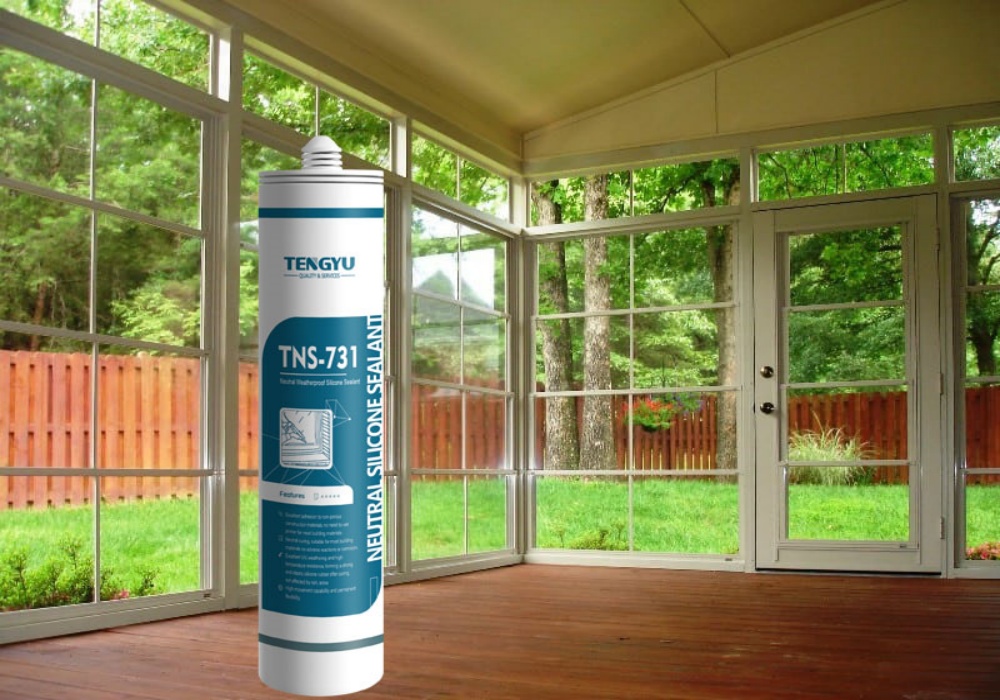
Silicone structural sealant is a one-component, neutral curing, specially designed for glass structure bonding and assembly in building curtain walls. It can be easily extruded and used under a wide range of temperature conditions. It relies on moisture in the air to cure into an excellent, durable high modulus, high elastic silicone rubber. The product does not require a primer on glass and can produce excellent adhesion.
Structural adhesives can withstand large loads, and are resistant to aging, fatigue, and corrosion. They have stable performance within their expected lifespan and are suitable for bonding strong structural parts. Non-structural adhesives have low strength and poor durability. They can only be used for ordinary, temporary bonding, sealing, and fixing, and cannot be used for bonding structural parts.
Related Articles
Quality Control in Sealant & Waterproof Coating Manufacturing | From Raw Materials to Finished Products
What Is No More Nails? No More Nails vs Silicone Sealant Explained
Silicone Sealant Yellowing: How to Avoid Discoloration in Clear Caulk
What Is No More Nails? Uses, Strength & How to Apply It
Floor Adhesives: A Comparative Guide to Acrylic, MS, and Polyurethane
You May Also Like
-
top Reco Quality Control in Sealant & Waterproof Coating Ma...

-
top Reco What Is No More Nails? No More Nails vs Silicone S...
nail free glue 
-
top Reco Silicone Sealant Yellowing: How to Avoid Discolora...
silicone sealant 
-
top Reco Which sealant is more mold resistant polyurethane ...
silicone sealant acrylic sealant pu sealant 
-
MS Polymer Wood Flooring Adhesive: Product Selecti...

-
Polyurethane waterproof concrete sealant Types: 1K...
construction materials Polyurethane sealant Factory & Manufacturer 
 Tina
Tina Tina
Tina
